Modified oligonucleotides for therapeutic discovery
Antisense oligonucleotides, splice-switching oligonucleotides, siRNA, miRNA, CRISPR guide RNAs and aptamers have specific design requirements. All require sufficient in vivo stability and efficient target engagement. Conjugation of lipids or targeting moieties can enhance cellular uptake, tissue-specific delivery, pharmacokinetic properties and, in some cases, overall oligonucleotide stability.
Why therapeutic oligonucleotides matter
Oligonucleotide therapeutics have evolved from a niche technology into a validated and rapidly expanding drug class. Since 1998, around 20 oligonucleotide-based medicines have received regulatory approval, spanning antisense, exon-skipping, siRNA and miRNA mechanisms across diverse diseases, with approvals accelerating in the past five years. By enabling selective modulation of previously difficult-to-drug biological targets, oligonucleotides are opening therapeutic opportunities in diseases previously considered untreatable with conventional approaches. Yet the field is still in its early stages, with substantial potential for new chemistries, conjugates and delivery strategies to expand the reach of this modality.
See a timeline of selected oligonucleotide approvals
Year | Drug | Mechanism | Indication | Company |
|---|---|---|---|---|
1998 | Fomivirsen | ASO | Ocular cytomegalovirus | Novartis |
2013 | Mipomersen | ASO | Familial hypercholesterolaemia | Genzyme / Isis |
2016 | Eteplirsen | Exon skipping | Duchenne muscular dystrophy | Sarepta |
2016 | Nusinersen | Splice switching | Spinal muscular atrophy | Biogen |
2018 | Inotersen | ASO | Hereditary transthyretin amyloidosis | Akcea |
2018 | Patisiran | siRNA | Hereditary transthyretin amyloidosis | Alnylam |
2019 | Givosiran | siRNA | Acute hepatic porphyria | Alnylam |
2019 | Golodirsen | Exon skipping | Duchenne muscular dystrophy | Sarepta |
2019 | Volanesorsen | ASO | Familial chylomicronaemia syndrome | Akcea |
2020 | Inclisiran | siRNA | Hypercholesterolaemia | Novartis |
2020 | Lumasiran | siRNA | Primary hyperoxaluria type 1 | Alnylam |
2021 | Casimersen | Exon skipping | Duchenne muscular dystrophy | Sarepta |
2023 | Tofersen | ASO | SOD1 amyotrophic lateral sclerosis | Biogen |
2023 | Eplontersen | ASO | Hereditary transthyretin amyloidosis | Ionis / AstraZeneca |
2025 | Fitusiran | siRNA | Haemophilia A and B | Sanofi / Alnylam |
2025 | Donidalorsen | ASO | Hereditary angioedema | Ionis |
2025 | Plozasiran | siRNA | Familial chylomicronaemia syndrome | Arrowhead |
Where we can help
We provide the design and synthesis of chemically optimised oligonucleotides, including modified sequences and conjugates, to support the evaluation of promising candidates for therapeutic development and enable efficient progression from concept to experimental testing.
- Early discovery: lead optimisation and oligonucleotide design support, so candidate sequences are chemically sound before they move into testing
- Scale-up: synthesis from small discovery-scale batches through to larger quantities, with the same chemistry and QC
- Choice of modification chemistry: we offer a broad range of oligonucleotide synthesis capabilities, including backbone, sugar and conjugation chemistries, enabling the development of modified oligonucleotides tailored to specific research and therapeutic applications
- Duplex melting (Tm) characterisation: experimentally determined affinity for complementary RNA, because nearest-neighbour prediction models break down once sequences carry modifications
Modification chemistry
Three key elements shape the performance of a therapeutic oligonucleotide in vivo: sugar chemistry, backbone chemistry and conjugation. At Assemblon, we offer a broad range of options across all three. The examples below highlight some of our capabilities and are not exhaustive.
Sugar modifications
DNA, RNA, 2′-OMe, 2′-F, FANA, 2′-MOE, LNA, cEt, 2′-NMA and TNA. These change how tightly a strand binds its target and how well it resists nuclease degradation.
Backbone modifications
Phosphodiester (PO), phosphorothioate (PS), phosphorodithioate (PS2), methylphosphonate (MeP), phosphoramidate (PA) and mesyl phosphoramidate (MsPA). Backbone chemistry is usually the single biggest driver of an oligonucleotide's stability in serum and tissue.
Conjugates and terminal modifications
We offer a range of conjugation and terminal-modification chemistries, including GalNAc, cholesterol, palmitate and 5′-(E)-vinylphosphonate. These modifications influence cellular uptake, tissue distribution, pharmacokinetics and other properties that are critical to the performance of therapeutic oligonucleotides in vivo.
Modifications
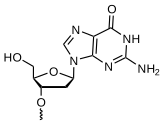
DNA
Standard deoxyribose, the unmodified reference chemistry
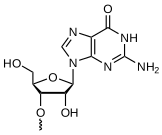
RNA
Standard ribose, native to endogenous RNA pathways
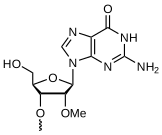
2′-OMe
Methyl at the 2′-OH, a common nuclease-resistance modification
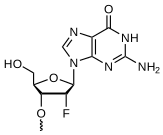
2′-F
Fluorine at the 2′ position, favours A-form (RNA-like) duplex geometry
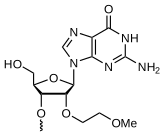
2′-MOE
Methoxyethyl at the 2′, the gapmer-wing chemistry behind most approved ASOs
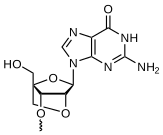
LNA
2′,4′-bridged "locked" sugar, a large affinity (Tm) boost per residue
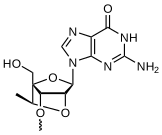
cEt
Constrained ethyl bridge, LNA-like affinity, different tolerability profile
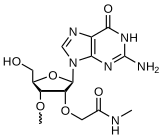
2′-NMA
2′-O-N-methylacetamide, shown to enhance splicing modulation activity in antisense oligonucleotides
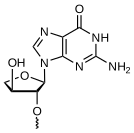
TNA
Threose nucleic acid, a four-carbon threose in place of ribose, valued for its exceptional nuclease resistance
PO
Native phosphodiester linkage

PS
Phosphorothioate, one non-bridging oxygen swapped for sulfur

PS2
Phosphorodithioate, both non-bridging oxygens swapped for sulfur

MeP
Methylphosphonate, a neutral, non-ionic backbone

PA
Phosphoramidate, nitrogen in place of the bridging oxygen

MsPA
Mesyl phosphoramidate, a newer, stabilised amidate chemistry

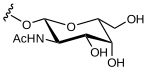
GalNAc
Triantennary sugar cluster, hepatocyte-targeted delivery via ASGPR
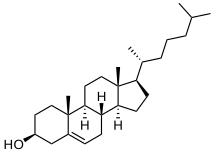
Cholesterol
Lipophilic conjugate, improves cellular uptake and tissue distribution
Palmitate
Fatty-acid conjugate, promotes membrane association

5′-(E)-VP
Vinylphosphonate, a metabolically stable 5′-phosphate mimic for siRNA

Built for your modality
Antisense oligonucleotides
Single-stranded oligonucleotides that act on a target mRNA by RNase H-mediated degradation (typically a gapmer, a central DNA block flanked by modified RNA wings), by steric blocking of translation, or by modulation of splicing. Fomivirsen, the first approved oligonucleotide drug, used the RNase H route.
Splice switching
Oligonucleotides that work inside the nucleus, redirecting pre-mRNA splicing to include or exclude a targeted exon and restore a functional reading frame. Nuclear localisation, not just target binding, is what makes this mechanism work.
siRNA
Double-stranded oligonucleotides that load into Argonaute2 as part of RISC, using the guide strand to direct sequence-specific cleavage of a complementary mRNA. GalNAc conjugation for hepatocyte targeting and lipid nanoparticle formulation took siRNA from concept to approved drug class.
miRNA
Mimics and inhibitors (antagomirs) of endogenous microRNAs, used to restore or suppress a regulatory pathway rather than knock down a single transcript.
CRISPR guide RNAs
Synthetic sgRNAs and crRNAs that direct Cas nucleases to a genomic target, where terminal chemistry matters for both stability and reduced immunogenicity.
Aptamers
Single-stranded oligonucleotides selected to fold into a defined three-dimensional structure and bind a protein target directly, closer to a chemical antibody than a hybridisation mechanism. Pegaptanib, the first approved therapeutic aptamer, relied on 2′-fluoro and 2′-OMe chemistry to hold that fold together.
Whatever the modality, the question is the same: does this sequence, with this chemistry, do what you need it to do in vivo? That is what we help you answer.
Quality
Every modified oligonucleotide we make undergoes UPLC-MS analysis prior to release, irrespective of scale or project timeline. We can also develop bespoke analytical methods to meet the specific requirements of your oligonucleotide and provide comprehensive characterisation. Our analytical workflows are designed to support rapid turnaround without compromising quality or analytical rigour. See Quality.
A partner throughout your programme
Oligonucleotide design and chemistry should be carefully considered to identify and address potential challenges before they become costly. We support researchers from initial chemistry considerations through oligonucleotide synthesis, purification and analysis, helping translate promising designs into well-characterised experimental materials. Our expertise can help identify practical challenges early and accelerate progression to downstream research.
Built on Oxford chemistry
Assemblon was co-founded by Emeritus Professor Tom Brown of the University of Oxford. He has published almost 500 research papers and patents in the nucleic acid field and has received several awards, including the Royal Society of Chemistry Josef Loschmidt Prize, the RSC Prizes for Nucleic Acid Chemistry and Interdisciplinary Research, the Khorana Prize, BBSRC Innovator of the Year and Chemistry World Entrepreneur of the Year.
His group's contributions to oligonucleotide chemistry underpin Assemblon's approach to modified oligonucleotide synthesis and functionalisation.
Talk to us
Send us the sequence and one of our experts will tell you whether it is feasible, what it will cost and how long it will take, before you commit.